
6 Best HVAC Products for Home Comfort
When it comes to staying comfortable at home or in the office, the HVAC system you trust can be the line between a cozy oasis and a costly headache—affecting everything from energy bills to indoor air quality. Choosing the right unit isn’t just about brand names; it’s about matching capacity, efficiency, and smart‑tech features to your specific climate, space, and budget. In this post we’ve cut through the noise to spotlight the six best HVAC products on the market today, highlighting what makes each one stand out and how they can keep you cool in summer, warm in winter, and saving money year‑round. Read on to find the perfect fit for your comfort needs.
6 Must-Have HVAC Products for Ultimate Comfort
We’ve carefully evaluated performance, energy efficiency, and user feedback to bring you the six standout HVAC solutions that deliver reliable climate control.
6. Boao 4 Packs Coil Brush

The Boao 4‑Pack Coil Brush set is a compact, versatile cleaning tool designed for HVAC, refrigeration, and any appliance with finned coils. Each brush measures just 18 × 7.5 cm (7.09 × 2.95 in), making it easy to slip into tight spaces while you scrub away dust, grime, and mold. The stiff yet smooth bristles reach every crevice without bending or breaking delicate fins, and the ergonomically‑shaped plastic handle provides a comfortable grip. A built‑in hole lets you hang the brush on a wall hook or sticker, keeping your workspace tidy. With four brushes in one pack, you have enough tools to tackle multiple units around the house—air‑conditioners, refrigerators, dehumidifiers, and more—while reducing the need for costly professional service.
Pros
- Compact size & flexible bristles – perfect for tight coil passages, cleaning efficiently without damaging fins.
- Multi‑use pack – four brushes cover a range of appliances, delivering great value for home maintenance.
- Space‑saving design – handle hole for wall hanging keeps tools organized and within easy reach.
Cons
- The plastic handle, while sturdy, may feel less robust than a metal alternative for very heavy‑duty jobs.
- Brush length is limited to 18 cm, which might require extra effort on larger, hard‑to‑reach coil sections.
5. HVAC Toolbox Decals

The 100‑piece HVAC sticker set is the perfect way to add a splash of personality to your hard hat, water bottle, laptop, or any gear you love. Made from premium, outdoor‑rated vinyl, each decal clings securely to smooth or slightly textured surfaces—think laptops, phone cases, journals, skateboards, and even car windows—while the professional‑grade adhesive ensures a strong bond without leaving any sticky residue when removed.
These stickers are built to last: they’re fully waterproof, weather‑resistant, and UV‑protected, so the bright, scratch‑resistant colors stay crisp whether you’re on a construction site or out on a sunny hike. Installation is a breeze; you can gently lift and reposition the decal during application, making it easy to achieve perfect alignment on notebooks, planners, or any surface you choose.
Whether you’re looking for a funny hard‑hat decal, a unique gift for a fellow HVAC tech, or a way to personalize your everyday items, this versatile set delivers durability, style, and hassle‑free removal.
Pros
- Strong, residue‑free adhesion on a wide range of surfaces.
- Waterproof, UV‑ and scratch‑resistant for long‑lasting, vibrant colors.
- Easy to apply and reposition without damage or misalignment.
Cons
- Vinyl may not adhere as well to highly porous or uneven textures (e.g., raw wood).
- Large quantity (100 stickers) can be overwhelming if you only need a few designs.
4. Milwaukee 13PC Swage Tool Set
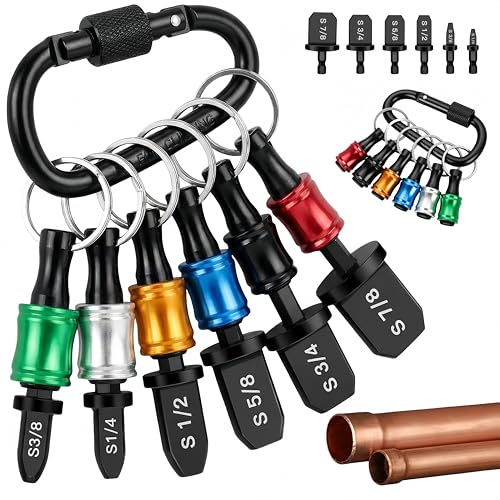
The 13‑piece Swage Tool HVAC Repairing Set is a compact, all‑in‑one solution for anyone who works with copper tubing on air‑conditioners, refrigerators, or other refrigeration equipment. The set includes six hardened HSS swaging bits (1/4″, 3/8″, 1/2″, 5/8″, 3/4″, 7/8″) mounted in a 1/4″ hexagon handle, plus six quick‑release bit holders and a sturdy carabiner for easy transport. Designed to attach to any standard electric drill, the rotating bit gently expands soft copper pipe, creating a leak‑proof joint when the drill speed is kept moderate. Each bit holder is color‑coded and forged from high‑quality aluminum alloy, so you can locate the right size at a glance and swap bits in seconds. Whether you’re a professional HVAC technician, plumber, or a DIY homeowner, this set delivers the precision and durability you need without taking up much space in your toolbox.
Pros
- Full size range – Six common pipe diameters covered, eliminating the need for multiple tools.
- Durable construction – HSS steel bits hardened at high temperature and a one‑piece aluminum holder resist wear and deformation.
- Quick‑change system – Color‑coded, pull‑out bushing lets you swap bits in under a second, saving time on the job.
Cons
- Requires a drill with adjustable speed; using a high speed can overheat the copper and cause burns.
- No built‑in depth stop, so consistent flare length depends on operator skill.
3. Toolant 3-1/2″ SAE Nut Driver Set

The toolant HVAC Tools Nut Driver Set is built for the toughest jobs in HVAC, automotive repair, and electrical work. It comes with the most commonly‑used drive sizes—1/4″, 5/16″, 3/8″, 7/16″, and 1/2″—so you’ll have the right socket at hand for any bolt. Two telescopic socket adapters (19.6 in × 2.83 in) let you reach both shallow and deep fasteners, while the integrated magnetic impact bits cling firmly to the bolt head, eliminating dropped screws and speeding up every turn.
The set’s walls are thicker than standard drivers, and each piece is heat‑treated through high‑temperature quenching for maximum strength and a longer service life. The reinforced magnets retain their pull even after countless impacts, making fastener retrieval effortless.
Note: The socket adapters are custom‑designed for this kit; the ball‑position differs from universal adapters and will only mate with the included sockets.
Pros
- Versatile size range covers virtually every HVAC, auto, and electrical bolt you’ll encounter.
- Telescopic magnetic adapters handle both shallow and deep fasteners without losing grip.
- Heavy‑wall, heat‑treated construction delivers superior durability and a longer lifespan than typical driver sets.
Cons
- The adapters are not universal, so they won’t fit sockets outside this specific kit.
- Magnetic strength, while long‑lasting, may be less effective on heavily coated or stainless steel fasteners.
2. Romeda Aluminum Foil Tape, 3.9 mil, 2″ x 65ft

Romeda’s 2‑inch × 65‑ft aluminum foil tape strikes the perfect balance between durability and flexibility. At 3.9 mil (0.1 mm) thickness, the foil is thick enough to resist tearing yet thin enough to conform to curved ductwork and pipe surfaces. A premium pressure‑sensitive adhesive delivers reliable bonding from –20 °C up to 120 °C (short‑term 130 °C), while UV, moisture, and heat resistance keep the seal intact in any weather. The reinforced backing lets you tear the tape cleanly without wrinkling, so you can finish jobs quickly and leave no adhesive residue. Versatile enough for HVAC ducts, dryer vents, pipe insulation, metal‑to‑metal joints, and even temporary metal repairs, this roll is a go‑to solution for both professional installers and DIY enthusiasts. Each purchase includes one 2‑in × 65‑ft roll and access to 24/7 customer support.
Pros
- Optimal thickness (3.9 mil) – tough enough to avoid breaks, yet flexible for tight bends.
- Strong, temperature‑stable adhesive – sticks securely from low to high heat, resisting UV and moisture.
- Easy‑tear backing – peels cleanly without curling, saving time and preventing residue.
Cons
- Designed primarily for smooth or mildly irregular surfaces; extremely rough textures may need a primer.
- The 2‑inch width may require overlapping for very large seams, adding a slight extra step.
1. HVAC Quick-Card

The REVISED AND UPDATED! HVAC Tables, Equations & Rules of Thumb Quick‑Card is a compact, laminated reference tool designed for HVAC professionals who need fast access to essential data on the job site. Though the specific feature list isn’t provided, the card’s recent revision guarantees that all tables, calculation formulas, and industry “rules of thumb” reflect the latest standards and best‑practice guidelines. Its durable, water‑resistant cardstock ensures the information stays legible even in demanding environments, while the pocket‑size format fits neatly into a tool belt or notebook for instant reference.
Pros
- Up‑to‑date content – revised equations and tables keep you aligned with current codes and efficiency standards.
- Portable reference – lightweight, laminated card fits in any pocket, saving time compared to flipping through manuals.
- Quick lookup – organized layout lets you find the right value or formula in seconds, boosting productivity on the floor.
Cons
- Limited space – the concise format means only the most common tables are included; niche calculations may require additional resources.
- Potential for obsolescence – as HVAC technology evolves, future updates may be needed to maintain accuracy.
Buying Guide
When selecting the best HVAC system, focus on efficiency, proper sizing, and long‑term operating costs to ensure comfort and savings. These criteria help you compare models and avoid costly mismatches.
- Energy efficiency rating (SEER/EER) – higher numbers lower utility bills and often qualify for rebates.
- Proper capacity (BTU) – a unit sized for your square footage and climate prevents short‑cycling or inadequate heating.
- Smart features and controls – Wi‑Fi thermostats, zoning, and programmable schedules boost convenience and energy savings.
- Build quality and warranty – durable compressors, corrosion‑resistant coils, and a solid warranty protect your investment.
- Customer reviews and dealer support – real‑world feedback and responsive service can reveal reliability issues before purchase.
By weighing efficiency, capacity, smart controls, durability, and reputable feedback, you can select an HVAC system that delivers consistent comfort without inflating your budget. Keep these factors in mind, and you’ll enjoy reliable climate control for years to come.
Frequently Asked Questions
What factors should I consider when choosing the best HVAC system for my home?
- Size & Capacity: Ensure the unit’s BTU rating matches your home’s square footage and layout. An oversized or undersized system can waste energy and reduce comfort.
- Energy Efficiency: Look for the SEER (Seasonal Energy Efficiency Ratio) rating for cooling and AFUE (Annual Fuel Utilization Efficiency) for heating. Higher numbers mean lower utility bills.
- Type of System: Decide between central air, ductless mini‑splits, heat pumps, or a hybrid system based on your home’s design and climate.
- Indoor Air Quality Features: Consider filters (HEPA, electrostatic), UV lights, or humidifiers/dehumidifiers if you have allergies or respiratory concerns.
- Reliability & Warranty: Choose reputable brands with solid warranties and read reviews on long‑term performance and service support.
How often should I service my HVAC system to keep it performing at its best?
- Routine Maintenance: Schedule a professional inspection and tune‑up twice a year—once before the cooling season and once before heating.
- Filter Changes: Replace or clean air filters every 1–3 months depending on usage and filter type.
- Seasonal Checks: Clean the outdoor condenser coils in spring/fall, and inspect the furnace burner and heat exchanger before winter.
- DIY Checks: Keep an eye on airflow, strange noises, or unusual odors; address issues promptly to avoid costly repairs.
What are the most energy‑saving HVAC upgrades I can make today?
- Smart Thermostats: Programmable or AI‑driven thermostats can cut heating/cooling costs by up to 10‑15% by optimizing temperature schedules.
- Variable‑Speed Motors: Upgrading to variable‑speed blowers or compressors provides more precise temperature control and reduces run‑time.
- Improved Insulation & Sealing: Enhancing attic, wall, and duct insulation prevents heat loss, letting your HVAC work less.
- Zoned HVAC Systems: Installing zoning dampers lets you heat or cool only occupied areas, saving energy in unused rooms.
- Regular Duct Cleaning & Sealing: Leaky or dirty ducts can waste 20‑30% of conditioned air; sealing and cleaning restores efficiency.
Conclusion
In choosing an HVAC system, the most important factors are efficiency, proper sizing, and reliable performance that match your home’s unique demands. Prioritizing energy‑saving features and smart controls not only reduces utility bills but also lessens environmental impact. Regular maintenance and clean filters are essential for consistent comfort and indoor‑air quality, while professional installation guarantees that the system operates at peak capacity. By focusing on these core principles—efficiency, appropriate capacity, smart technology, and diligent upkeep—you’ll secure a climate solution that delivers lasting comfort, lower costs, and peace of mind for years to come, and reliable service throughout the seasons for you.